

Can an Inline Capper be used for honey products?
As a leading supplier of inline cappers, I often get asked whether our inline capping machines can be used for honey products. The short answer is yes, but there are several factors to consider to ensure the best results.
Understanding the Nature of Honey
Honey is a unique substance. It is a viscous liquid, with a consistency that can vary depending on factors such as its floral source, temperature, and water content. At lower temperatures, honey can become extremely thick and even crystallize, while at higher temperatures, it flows more easily. This variability in viscosity poses specific challenges when it comes to packaging.
Advantages of Using an Inline Capper for Honey Products
Efficiency
Inline cappers are designed to work seamlessly in a continuous production line. They can quickly and accurately cap a large number of honey containers in a short period. This is crucial for honey producers, especially those with high - volume production requirements. For example, if you are a commercial honey producer supplying supermarkets, you need a capping solution that can keep up with the demand. An inline capper can significantly increase your production throughput, reducing the time spent on manual capping and allowing you to meet market demands more effectively.
Precision
These machines offer a high level of precision in capping. They can apply the right amount of torque to ensure that the caps are tightly sealed without over - tightening, which could damage the container or cap. This is particularly important for honey products, as a proper seal is essential to prevent leakage and maintain the freshness of the honey. A well - sealed container also protects the honey from air and moisture, preserving its quality and flavor over time.
Versatility
Inline cappers can handle a variety of container types and sizes commonly used for honey. Whether you are packaging honey in Glass Jar Capping Machine glass jars or plastic bottles, an inline capper can be adjusted to fit the specific requirements of your containers. This versatility allows honey producers to use different packaging options based on their target market and branding preferences.
Challenges and Solutions when Capping Honey
Viscosity Issues
As mentioned earlier, the viscosity of honey can cause problems during the capping process. If the honey is too thick, it may drip onto the capping area, interfering with the sealing process. To overcome this issue, many inline cappers can be equipped with features such as pre - cleaning stations or anti - drip nozzles. These mechanisms ensure that the capping area is clean before the cap is applied, reducing the risk of contamination and ensuring a proper seal.
Temperature Control
Temperature plays a significant role in the viscosity of honey. To maintain a consistent flow, it may be necessary to control the temperature of the honey during the packaging process. Some inline cappers can be integrated with temperature - controlled systems. By keeping the honey at an optimal temperature, it flows more smoothly, making it easier to fill and cap the containers.
Cap Compatibility
It is essential to choose the right type of caps for honey products. Some caps may be more prone to sticking to the honey, making them difficult to remove for the consumer. When selecting an inline capper, it is important to consider its compatibility with different cap materials and designs. For example, Cap Compression Machine cap compression machines are designed to work with a wide range of caps, ensuring a secure and user - friendly seal.
Types of Inline Cappers Suitable for Honey
Rotary Inline Cappers
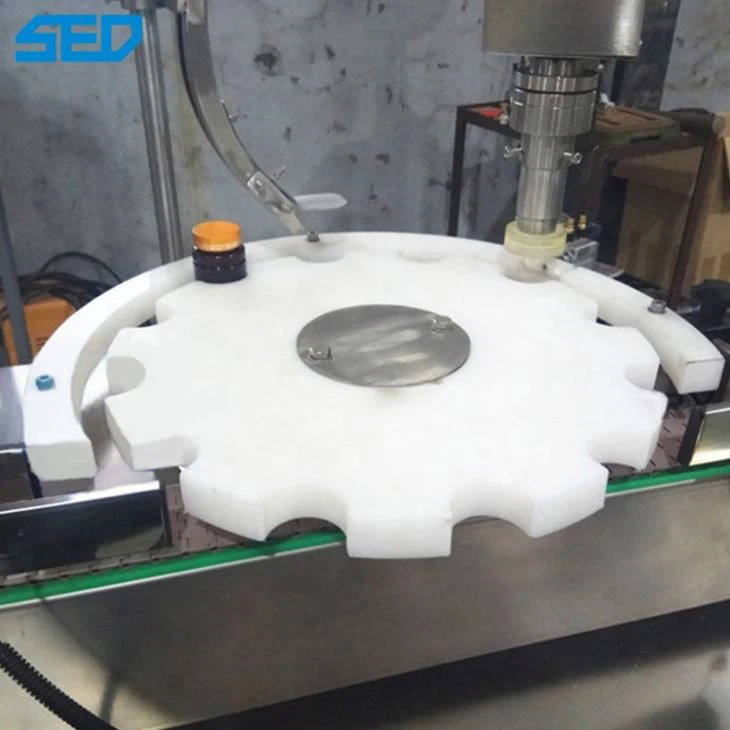
Rotary inline cappers are a popular choice for honey packaging. They use a rotating turret to move the containers through the capping process. This design allows for high - speed capping, making them ideal for large - scale honey production. Rotary cappers can be easily integrated into existing production lines and can handle a variety of container shapes and sizes.
Automatic Inline Cappers
Automatic Capper Machine Automatic inline cappers offer a high degree of automation. They can be programmed to perform various capping functions, such as cap sorting, feeding, and tightening. These machines are suitable for both small - and large - scale honey producers, as they can be adjusted to meet different production requirements.

Quality Assurance and Hygiene
When packaging honey, quality assurance and hygiene are of utmost importance. Inline cappers should be made of high - quality materials that are resistant to corrosion and easy to clean. Stainless steel is a commonly used material in the construction of inline cappers, as it is durable and can be sanitized effectively. Regular maintenance and cleaning of the capping machine are also essential to prevent the growth of bacteria and ensure the safety of the honey products.
Cost - effectiveness
Investing in an inline capper for honey products can be a cost - effective solution in the long run. While the initial purchase price may seem high, the increased production efficiency and reduced labor costs can offset this expense. Additionally, the improved quality and consistency of the capping process can lead to fewer product returns and increased customer satisfaction, which can have a positive impact on your bottom line.
Conclusion
In conclusion, an inline capper can indeed be used for honey products. With its efficiency, precision, and versatility, it offers a reliable solution for honey producers looking to streamline their packaging process. However, it is important to consider the unique properties of honey, such as its viscosity and temperature sensitivity, and choose the right type of inline capper and caps to ensure the best results.
If you are a honey producer interested in learning more about our inline capping machines or would like to discuss your specific packaging needs, we welcome you to contact us for a detailed consultation. Our team of experts is ready to assist you in finding the most suitable capping solution for your honey products.
References
- "Packaging Technology for Food Products", John Wiley & Sons
- "Industrial Packaging Machinery Handbook", McGraw - Hill