


Blister packaging remains one of the most widely used packaging methods in the pharmaceutical industry. Whether packaging tablets, capsules, or healthcare products, selecting the right blister packaging machine directly impacts production efficiency, packaging quality, and regulatory compliance.
However, with numerous machine configurations available on the market, pharmaceutical manufacturers often struggle to determine which solution best fits their production requirements.
This guide explains the key factors to consider when selecting a pharmaceutical blister packaging machine and highlights the features that contribute to reliable and efficient blister packaging operations.
1. Determine Your Packaging Material Requirements
The first consideration is the type of packaging material your products require.
Common blister packaging structures include:
- PVC / Aluminum Foil
- PVC / PVDC / Aluminum Foil
- Aluminum-Aluminum (Alu-Alu)
- Tropical Blister Packaging
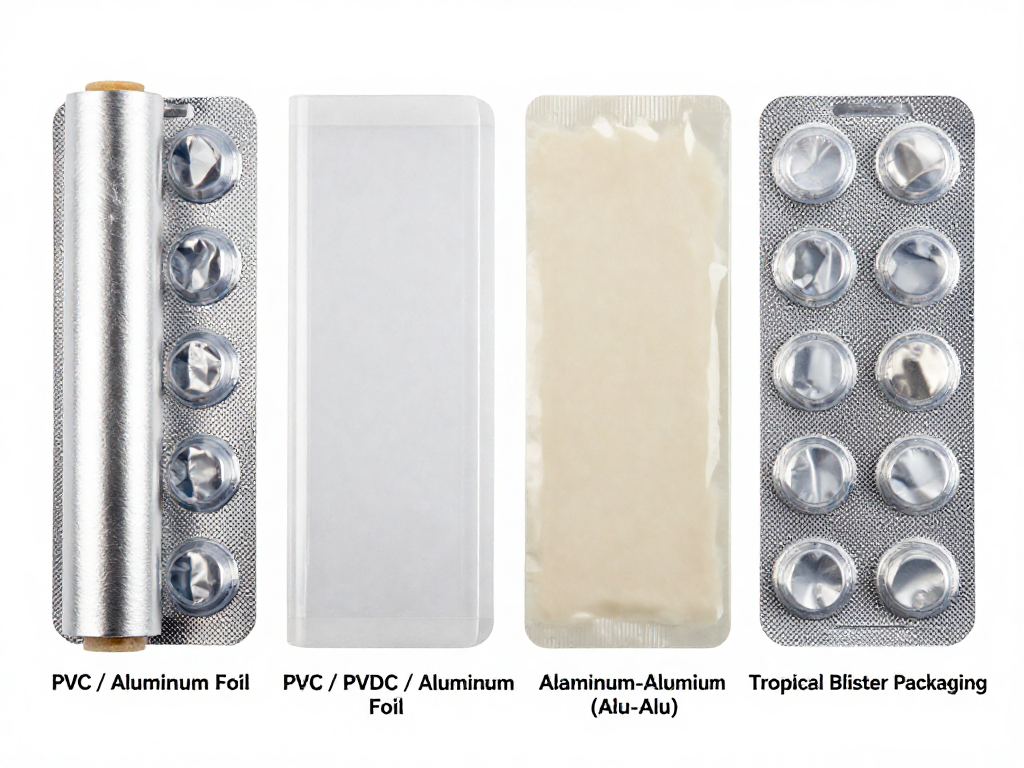
For moisture-sensitive and light-sensitive products, Alu-Alu blister packaging typically provides superior barrier protection compared to standard PVC-Aluminum packaging.
A machine capable of handling both ALU-PVC and ALU-ALU applications offers greater production flexibility and reduces future investment costs.
2. Evaluate Forming Technology
Blister machines generally use one of two forming methods:
Thermoforming
Thermoforming heats plastic film before forming cavities using compressed air or mechanical pressure.
Advantages include:
- Lower packaging material cost
- Faster production speed
- Excellent product visibility
Cold Forming
Cold forming is commonly used for Alu-Alu blister packaging.
Advantages include:
- Superior moisture barrier protection
- Enhanced oxygen resistance
- Extended product shelf life
A versatile blister packaging machine should support both thermoforming and cold forming operations.

3. Consider Production Capacity
Production requirements vary significantly between pharmaceutical companies.
Key factors include:
- Number of products per blister
- Required output per hour
- Shift operation schedules
- Future expansion plans
The SED-250P-A Blister Packaging Machine provides a punching frequency of up to 45 cycles per minute, making it suitable for medium- to high-volume pharmaceutical production environments.

4. Look for Flexible Format Changeover
Many pharmaceutical manufacturers package multiple products on a single production line.
Machines with quick-change tooling systems offer significant advantages:
- Reduced downtime
- Faster product changeovers
- Lower labor costs
- Improved production flexibility
5. Ensure Precise Feeding Performance
Product feeding accuracy directly affects packaging quality.
Common challenges include:
- Missing tablets
- Double feeding
Product breakage
- Inconsistent cavity filling
For pharmaceutical applications, accurate feeding systems are essential.
The SED-250P-A can be equipped with customized feeding solutions, including:
- Universal feeders
- Vibratory feeders
- Dedicated Alu-Alu feeding systems
- Product-specific feeding tooling
These options help achieve high filling accuracy for a wide range of tablets and capsules.
6. Evaluate Automation and Control Systems
Modern pharmaceutical manufacturers increasingly demand intelligent production control to ensure efficiency and accuracy. To achieve this, a high-quality blister packaging machine must integrate advanced features such as PLC control systems, a human-machine interface (HMI), servo-driven positioning, automatic fault monitoring, and comprehensive recipe management. These technologies work together to minimize human error and streamline operations. Specifically designed to meet these modern demands, the SED-250P-A incorporates a robust PLC-based control architecture paired with an intuitive touchscreen interface, providing operators with seamless navigation and reliable, highly automated process control.

7. Verify Seal Quality and Product Protection
Achieving a robust, hermetic seal is critical to preventing micro-voids and channel leaks that compromise product barrier integrity and shelf life. To ensure consistent seal quality, a high-performance blister machine must provide precise, closed-loop control over the three core sealing variables: temperature, pressure, and dwell time. Look for systems equipped with independent PID temperature controllers to maintain uniform heat distribution across the sealing grid, combined with regulated pneumatic or mechanical pressure cylinders to guarantee consistent force across the entire web.
Additionally, thermal protection during unexpected machine stoppages is a non-negotiable safety feature. Advanced packaging lines must feature automatic sealing platen or roller retraction systems. This mechanical synchronization instantly separates the heating elements from the packaging materials during downtime. This not only prevents the thermal degradation and deformation of the barrier films but also protects the active pharmaceutical ingredients (APIs) inside the cavities from localized overheating, while significantly extending the lifespan of the sealing tooling.
8. Check GMP Compliance and Machine Construction
For any pharmaceutical application, the equipment design must strictly adhere to GMP (Good Manufacturing Practice) requirements to ensure optimal hygiene and product safety. Buyers must prioritize machines that feature high-quality stainless steel construction, easy cleaning access, smooth contact surfaces to prevent cross-contamination, reliable electrical components, and comprehensive documentation support. Fully aligned with these rigorous industry standards, the SED-250P-A is meticulously designed to support clean pharmaceutical manufacturing environments. It utilizes internationally recognized electrical components and boasts a sanitary, accessible structure that simplifies maintenance and ensures continuous regulatory compliance.

Frequently Asked Questions (FAQs)
1. What is a pharmaceutical blister packaging machine?
A pharmaceutical blister packaging machine is an automated packaging system used to package tablets, capsules, softgels, and other solid-dose products into sealed blister packs. The machine forms cavities, fills products, seals lidding material, prints batch information, and cuts finished blister cards.
2. What is the difference between ALU-PVC and ALU-ALU blister packaging?
ALU-PVC blister packaging uses transparent PVC film and aluminum foil, allowing product visibility while providing standard protection.
ALU-ALU blister packaging uses aluminum foil on both sides and is formed through cold-forming technology. It offers superior protection against moisture, oxygen, and light, making it ideal for highly sensitive pharmaceutical products.
3. Can one blister packaging machine handle both ALU-PVC and ALU-ALU materials?
Yes. Many modern pharmaceutical blister machines, including the SED-250P-A Blister Packaging Machine, are designed to process both ALU-PVC and ALU-ALU packaging materials, providing greater flexibility for pharmaceutical manufacturers.
4. What products can be packaged using a blister packaging machine?
Blister packaging machines are commonly used for:
- Tablets
- Hard capsules
- Softgel capsules
- Effervescent tablets
- Nutraceutical products
- Healthcare supplements
Different feeding systems can be configured according to product shape and size.
5. What production capacity should I choose for my blister packaging machine?
The ideal capacity depends on:
- Product type
- Blister format
- Daily production requirements
- Future expansion plans
For medium-volume pharmaceutical production, machines with outputs between 30 and 45 cycles per minute are often suitable. Higher-capacity production lines may require fully automatic integrated blister-cartoning solutions.
6. How important is forming depth in blister packaging?
Forming depth determines the maximum size of products that can be packaged.
Standard pharmaceutical blister machines typically support depths between 12 mm and 15 mm, while customized tooling can achieve greater depths for larger tablets, capsules, or healthcare products.
Ready to Upgrade Your Blister Packaging Line?
Whether you're packaging tablets, capsules, softgels, or nutraceutical products, choosing the right blister packaging machine can significantly improve efficiency, product protection, and overall production performance.
At SED Pharma, we help pharmaceutical and nutraceutical manufacturers worldwide select the most suitable packaging solutions based on their products, capacity requirements, and compliance standards.
Have questions about blister packaging? Contact our engineering team today for a free consultation and customized solution proposal.