


Recurring equipment limitations may justify an upgrade when they threaten process control, product quality, regulatory readiness, capacity, or total operating cost. Machinery age alone is not a sufficient trigger.
The best time to start planning is before a critical failure. Rising downtime, obsolete controls, inconsistent output, slow changeovers, unavailable spare parts, and gaps in electronic records are all early warnings. A structured pharmaceutical production line upgrade can range from replacing one control panel to installing a fully integrated line.
7 Signs Your Pharmaceutical Production Line Needs an Upgrade
The signs your pharmaceutical production line needs an upgrade are measurable problems in reliability, capacity, quality, compliance, flexibility, or lifecycle support that the current system can no longer control economically.
There is no universal replacement age for pharmaceutical manufacturing equipment. A well-maintained mechanical system may remain useful for years, while a newer machine may become unsuitable after a product, process, software, or regulatory change. Evaluate trends against your own validated baseline and approved alert limits.
1. Unplanned downtime is rising
Repeated stoppages are often the clearest signal that a line is approaching an operational limit. Track downtime by machine, failure mode, product, shift, and lost production hours. A single incident may require repair; a recurring pattern calls for a lifecycle review.
Pay particular attention when:
- The same component fails after repeated corrective maintenance.
- Mean time between failures is falling.
- Restart, cleaning, or line-clearance work consumes more time than the repair.
- One unreliable machine repeatedly stops the entire upstream or downstream process.
- Emergency work orders are replacing planned preventive maintenance.
Do not wait until a machine becomes impossible to restart. A planned shutdown normally gives the project team more control over spares, validation resources, inventory, and customer commitments than an emergency replacement.
2. Maintenance cost is increasing and spare parts are disappearing
An older machine becomes a business risk when the manufacturer no longer supports its PLC, drive, HMI, sensor, or operating system. Even if the mechanical frame remains sound, unsupported components can extend repair time and force the site to depend on refurbished parts or a small number of specialists.
Compare the last 12 months of labor, parts, external service, expedited shipping, and downtime cost with the previous period. The decision should be based on total cost, not the price of a replacement component alone.
If support is ending, document the remaining stock of critical spares and the expected lead time before deciding how long the line can safely operate.
3. The line cannot meet demand or target cycle time
Capacity problems appear as growing backlogs, overtime, missed delivery dates, or an inability to add a new SKU. The bottleneck may not be the machine with the lowest nameplate speed. A feeder, inspection station, cleaning step, manual transfer, or packaging operation may limit the complete line.
Measure actual good output rather than theoretical speed. Overall equipment effectiveness can help organize the analysis:
Use OEE as a diagnostic measure, not as a universal pass/fail number. A low result only becomes actionable after the team identifies whether the loss comes from downtime, reduced speed, rejects, or a combination of the three.
A targeted upgrade may remove the constraint without replacing every machine.
4. Rejects, deviations, or process variability are increasing
A rise in fill-weight variation, tablet defects, capsule rejects, seal failures, label errors, or foreign-particle findings can indicate wear, inadequate control, poor material handling, or insufficient inspection. These issues matter even when final product still passes release testing because the process may be losing capability.
Trend deviations, rework, scrap, yield, alarms, in-process results, and critical process parameters together. If a machine requires frequent manual adjustment to remain within specification, investigate the root cause before assuming that operator retraining will solve it.
Modern sensors, closed-loop controls, vision inspection, or more suitable product-contact components may improve consistency, but any change that can affect product quality must pass formal change control.

Machine condition and process consistency should be reviewed together
5. The controls no longer support current data and compliance needs
Legacy controls may lack individual user access, secure audit trails, accurate time stamps, recipe control, data backup, or reliable connections to SCADA, MES, and serialization systems. Manual transcription can also create delays and data-integrity risk.
A modernization project may be justified when the line cannot:
- Restrict critical changes to authorized users.
- Record alarms, interventions, and parameter changes consistently.
- Retrieve complete batch or equipment history during an investigation.
- Back up and restore required electronic records.
- Exchange data with current plant systems through supported interfaces.
Technology does not make a process compliant by itself. The intended use, risk assessment, procedures, access controls, testing, training, and retained evidence must work together.
6. Changeovers and cleaning take too long
Long format changes and difficult cleaning reduce available capacity, especially in multiproduct facilities.
Common causes include:
- Tool-dependent adjustments.
- Inaccessible product-contact areas.
- Too many loose change parts.
- Manual recipe entry.
- Equipment designed for a narrower product range.
Record changeover and cleaning time from the last acceptable unit of one batch to the first acceptable unit of the next. Separate mechanical adjustment, cleaning, line clearance, inspection, documentation, and start-up losses.
This reveals whether quick-change tooling, recipe management, clean-in-place features, improved access, or a new machine would provide the greatest benefit.
7. A new product, market, or scale exceeds the original design
The existing line may be reliable but still unsuitable for a new dosage form, container, batch size, containment need, inspection requirement, or production volume.
Examples include:
- Moving from manual to automated capsule inspection.
- Adding serialization.
- Introducing a smaller fill volume.
- Connecting previously separate processing and packaging stages.
In this situation, the trigger for pharmaceutical production line modernization is strategic rather than failure-driven.
Define future products and capacity before purchasing equipment so that today's solution does not become tomorrow's bottleneck.
What Does a Pharmaceutical Production Line Upgrade Involve?
A pharmaceutical production line upgrade is a controlled change to equipment, automation, utilities, layout, or supporting systems that improves performance while preserving product quality and the validated state.
The scope may include:
- Replacing PLCs, HMIs, drives, sensors, motors, or safety interlocks.
- Adding automatic feeding, transfer, counting, filling, inspection, rejection, labeling, or cartoning.
- Improving containment, dust extraction, cleanability, guarding, or ergonomics.
- Connecting equipment to SCADA, MES, electronic batch records, or serialization systems.
- Reconfiguring line balance and material flow.
- Replacing one machine, several stations, or the complete line.
Regulatory planning must begin with the project, not after installation.
A lifecycle approach to process validation typically covers process design, qualification, and continued verification. Changes to automated equipment should therefore be evaluated through appropriate risk assessment, change control, testing, and documentation.
The required scope depends on intended use, product risk, the magnitude of change, and the site's pharmaceutical quality system.
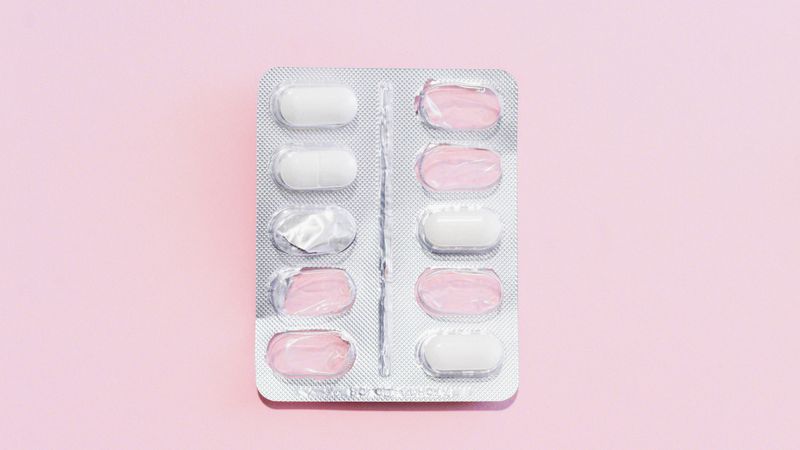
Packaging format and tablet appearance can provide useful context during quality investigations
Should You Retrofit, Replace, or Modernize the Production Line?
Retrofitting modifies a serviceable machine, replacement installs a new machine for an existing function, and full modernization redesigns how multiple machines, controls, and data systems work together.
| Decision factor | Retrofit existing equipment | Replace one or more machines | Build or modernize the full line |
|---|---|---|---|
| Best fit | Mechanical platform is sound; controls or selected components are obsolete | Core machine is worn, unsupported, unsafe, or unable to meet requirements | Multiple bottlenecks exist or future production needs require major changes |
| Typical scope | PLC/HMI, drives, sensors, guarding, inspection, recipe or data functions | New filler, tablet press, capsule filler, counter, labeler, cartoner, or inspection unit | Integrated processing, transfer, inspection, packaging, controls, and data systems |
| Capital requirement | Usually lowest | Medium | Highest |
| Shutdown risk | Shorter shutdown but possible legacy integration issues | Requires installation planning | Requires detailed project planning and commissioning |
| Validation impact | Focused assessment; requalification may be required | Qualification and process impact assessment | Broad qualification and validation activities |
| Main risk | Hidden limitations remain | New bottlenecks may appear elsewhere | Higher complexity and longer implementation time |
Choose a retrofit when the equipment's fundamental design remains suitable and the proposed change can solve the current limitation.
Choose replacement when the core machine no longer performs its intended function reliably.
Consider a custom pharmaceutical production line when isolated improvements cannot solve multiple connected constraints.
Before deciding, evaluate:
- Production speed.
- Material handling.
- Utilities.
- Floor space.
- Data communication.
- Cleaning requirements.
- Reject handling.
A machine that performs well independently may still create problems if it does not integrate with the rest of the line.

Product format and dosage-form requirements should be defined before selecting an upgrade scope
How to Plan a Pharmaceutical Production Line Upgrade
A pharmaceutical production line upgrade plan is a cross-functional, risk-based program that defines requirements, controls change, qualifies the solution, and verifies performance after start-up.
1. Define the business and quality case
Form a team that includes production, engineering, maintenance, automation, quality, validation, EHS, IT, supply chain, and finance as applicable.
State the problem in measurable terms:
- Lost production hours.
- Output shortfall.
- Deviation trends.
- Unsupported components.
- New product requirements.
- Data management needs.
A clear problem definition helps determine whether the project requires a retrofit, equipment replacement, or a complete production line upgrade.
2. Establish a documented baseline
Use representative production data to understand the current performance level.
Track:
- Good units or batches per hour.
- Planned and unplanned downtime.
- Changeover and cleaning time.
- Rejects, rework, scrap, and yield.
- Maintenance labor and parts.
- Deviations, alarms, and manual interventions.
- Energy or utility consumption where relevant.
3. Write the user requirements before requesting quotations
The user requirements specification should define:
- Products and dosage forms.
- Batch sizes and target capacity.
- Critical process parameters.
- Materials of construction.
- Cleaning requirements.
- Containment needs.
- Automation functions.
- Electronic records.
- Safety requirements.
- Documentation and service expectations.
Consider equipment interfaces as well. A high-speed machine still requires compatible upstream feeding, downstream handling, rejection systems, and data communication.
4. Assess product and validation risk
Every upgrade should be evaluated through the site's change-control process.
Consider potential impacts on:
- Product quality.
- Critical process parameters.
- Cleaning procedures.
- Utilities.
- Electronic records.
- Operator training.
- Regulatory documentation.
Depending on the project scope, activities may include:
- Design review.
- Factory acceptance testing (FAT).
- Site acceptance testing (SAT).
- Installation qualification.
- Operational qualification.
- Performance qualification.
The validation approach should match the level of risk and change.
5. Evaluate the complete lifecycle cost
The investment decision should consider more than the purchase price.
Evaluate:
- Equipment cost.
- Integration expenses.
- Validation activities.
- Training.
- Spare parts.
- Maintenance requirements.
- Downtime reduction.
- Labor savings.
- Capacity improvement.
A simple payback calculation is:
For example, if an upgrade project costs $360,000 and generates $180,000 in annual net savings:

Different capsule formats may require compatible handling and inspection settings
6. Test interfaces before the shutdown
Before installation, verify:
- Equipment communication.
- Production speed.
- Alarm functions.
- Safety interlocks.
- Recipe management.
- Reject systems.
- Data collection.
- Restart procedures.
7. Control start-up and monitor performance
The project team should plan:
- Shutdown sequence.
- Equipment removal.
- Installation activities.
- Operator training.
- Production restart.
- Performance monitoring.
After release, compare actual performance with the approved baseline to confirm that the upgrade achieves the intended improvements.

Future product formats should be considered when evaluating line flexibility
What to Consider When Selecting a Pharmaceutical Equipment Supplier
An upgrade partner should review interfaces, utilities, controls, cleaning, documentation, and lifecycle support-not only the performance of one machine.
Useful information to share includes:
- Products, dosage forms, batch sizes, and target capacity.
- Current process flow, equipment list, and known bottlenecks.
- Container and packaging formats, including compatibility with blister packaging machines.
- Required automation and data interfaces.
- Available layout, access, and utilities.
- Destination market, documentation, and service expectations.
Experience with standalone equipment and integrated lines can help distinguish a targeted replacement from broader modernization. SED Pharma is one example of a supplier covering processing, inspection, and packaging applications.
Final selection should follow the manufacturer's requirements, risk assessment, validation strategy, and lifecycle-cost review. Qualification and regulatory acceptance remain the pharmaceutical manufacturer's responsibility.
Conclusion
Upgrade planning should begin when production and quality data show that the line is becoming harder to control, maintain, or scale-not simply because equipment has reached a certain age.
Comparing downtime, maintenance cost, capacity, variability, changeover time, data requirements, and lifecycle cost helps determine whether retrofit, replacement, or broader modernization is appropriate.
A documented baseline, clear user requirements, and early validation planning provide a stronger basis for equipment and supplier decisions.
Frequently Asked Questions
How often should a pharmaceutical production line be upgraded?
There is no universal interval. Review maintenance, quality, and continued process-verification data, and reassess the line when performance, support status, product requirements, or regulations change.
What are the most important signs your pharmaceutical production line needs an upgrade?
Key signs include recurring downtime, rising maintenance cost, unavailable parts, insufficient capacity, increasing deviations, weak electronic records, slow changeovers, and new product requirements.
Is retrofitting pharmaceutical equipment better than replacing it?
Retrofit is appropriate when the mechanical platform is sound and a defined controls, safety, or automation change will solve the problem. Replace equipment when the core machine is worn, unsupported, difficult to clean, or unable to meet process requirements.
Does upgraded pharmaceutical equipment automatically meet GMP requirements?
No. Equipment can support hygienic operation, control, documentation, and validation, but GMP compliance also depends on qualification, procedures, training, maintenance, data governance, and quality oversight.
How can a manufacturer minimize downtime during an upgrade?
Freeze requirements early, test interfaces before shipment, stock critical materials, plan the shutdown sequence, train operators, and maintain a documented contingency plan.
What information should be sent to a pharmaceutical production line supplier?
Send the product and dosage form, process flow, current equipment, target capacity, package formats, available space and utilities, automation interfaces, documentation needs, destination market, and preferred shutdown date.