


A lab freeze dryer and a spray dryer does the job of drying materials.
The difference comes in how you will achieve the drying.
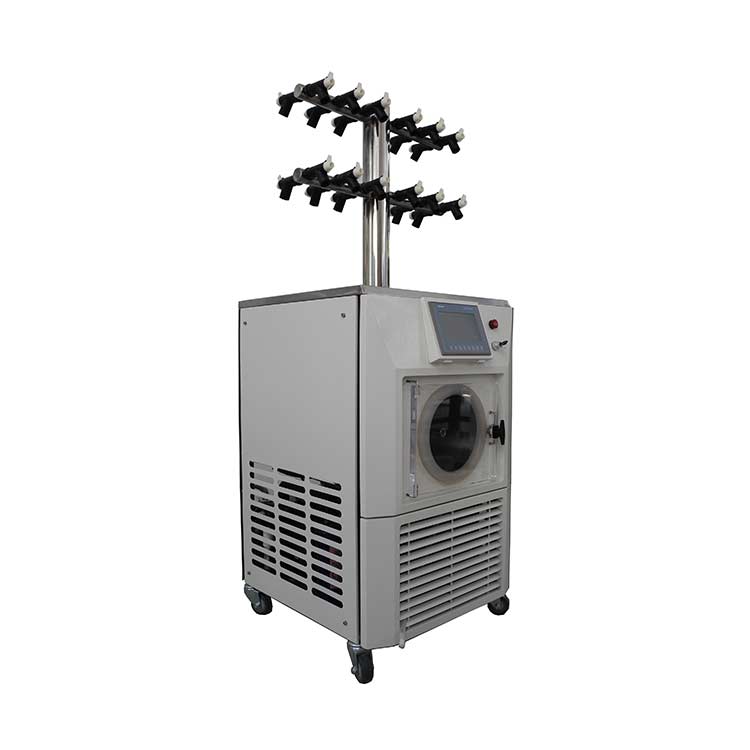
lab freeze dryer
Spray Dryer

Here are some of the comparisons of a lab freeze dryer and a spray dryer:
· Drying Temperature
A lab freeze dryer dries materials at low temperatures.
On the other hand, a spray dryer uses high temperatures to dry materials.
· Drying Principle
A lab freeze dryer dries the materials and then sublimates the frozen water into gas.
A spray dryer will apply hot air to remove the liquid from the material via evaporation in the drying chamber.
· Material of Construction
The main body of a lab freeze dryer and a spray dryer is mainly durable stainless-steel.
· Quality Compliance
A lab freeze dryer and a spray dryer conform to quality standards set by international bodies for health and safety reasons.
· Duration of Drying
A lab freeze dryer takes a long time to dry materials than a spray dryer.
A lab freeze dryer will take approximately 5 to 12 hours to dry the products.
· Effects on the Final Product
A spray dryer uses heat to dry materials, and you cannot use it to dry heat-sensitive materials.
This is because it affects quality such as:
It will cause discoloration
It will change the physical structure of the product
It will cause some chemical changes in the final product
It will cause a loss of the aromatic substance of the product.
The final product may have poor solubility levels.
On the other hand, you can use a lab freeze dryer to dry heat-sensitive materials while maintaining their quality.
This means a lab freeze dryer will overcome all these imperfections that a spray dryer will cause.
· Atomization
A lab freeze dryer and a spray dryer all apply the atomization principle to dry the products.
They have nozzles that accomplish the atomization process that converts bulk liquid into small particles.