



Why Labeling Accuracy Matters in Pharmaceutical Packaging
Labeling accuracy is a critical part of pharmaceutical packaging. A label does more than display product information. It also provides important data for identification, traceability, and regulatory compliance.
Even a small labeling error can create serious problems. Incorrect label positions may affect barcode scanning, serialization verification, and automated inspection. In some cases, products may need to be rejected or reworked, increasing production costs and reducing efficiency.
|
Evaluation Factor |
Manual Inspection |
Automated Pharmaceutical Label Testing |
|
Inspection Coverage |
Random sampling based on operator checks |
100% inline inspection of every product |
|
Accuracy Consistency |
Depends on operator experience and attention |
Stable and repeatable inspection results |
|
Error Detection |
May miss small defects during high-speed production |
Detects label position, barcode, and printing errors automatically |
|
Data Recording |
Manual records with limited traceability |
Electronic records with audit trail support |
|
Production Efficiency |
Slower and may interrupt workflow |
Integrated with labeling lines for continuous operation |
|
Quality Risks |
Higher risk of defective products reaching the next stage |
Reduces recall risks and improves GMP compliance |
For pharmaceutical manufacturers, maintaining consistent labeling quality is essential. Manual labeling and inspection processes are difficult to control, especially when production speeds increase. This is why many manufacturers use pharmaceutical labeling machines to improve accuracy and maintain stable packaging performance.
Automated labeling systems provide precise application, reliable inspection, and better production control. They help manufacturers reduce human errors while supporting GMP-compliant pharmaceutical production.
How Pharmaceutical Labeling Machines Improve Labeling Accuracy
-
Automated Control Ensures Accurate Label Application
Pharmaceutical labeling machines improve accuracy by controlling the entire labeling process, from product positioning to label application.
During production, containers may have different sizes, shapes, or surface conditions. Without proper control, labels can shift, wrinkle, or be applied incorrectly. Automated labeling systems use sensors, positioning mechanisms, and control software to ensure labels are applied in the correct position.
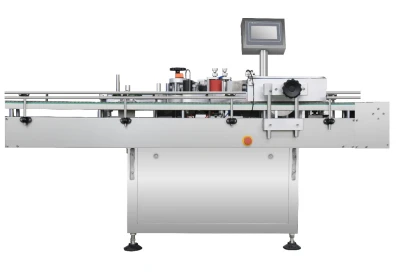
For cylindrical containers, accurate positioning is especially important because the label must follow a curved surface. SED Pharma's cylindrical surface labeling machines are designed for products such as round bottles and metal cans. The equipment uses automatic product detection and label detection functions to maintain stable labeling performance.
-
-
Stable Production Performance with Efficient Operation
The machine can achieve labeling accuracy within ±1 mm and support production speeds from 20 to 200 pieces per minute. These capabilities help manufacturers maintain consistent output while reducing label waste caused by inaccurate application.
PLC touch screen control also makes operation easier. Operators can adjust parameters, monitor production status, and manage labeling processes more efficiently.
By improving positioning accuracy and reducing manual adjustment, pharmaceutical labeling machines help manufacturers achieve higher packaging efficiency and more reliable quality control.
How Automated Label Testing Supports GMP Compliance
Pharmaceutical labeling requirements are closely related to product quality and regulatory compliance. A complete labeling process must ensure that every label is correct, readable, and traceable before products reach the market.
Pharmaceutical label testing helps manufacturers verify label quality during production. Instead of relying only on manual checks, automated inspection systems can examine every product on the production line.
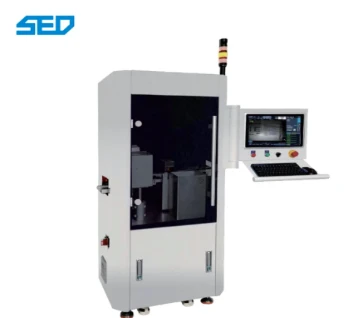
Vision inspection technology can detect common labeling issues, including:
- Incorrect label position
- Missing labels
- Barcode and QR code problems
- Incorrect batch numbers or expiry dates
- Poor print quality
- Label wrinkles or bubbles
When a defect is detected, the system can automatically reject the product and record inspection results. These electronic records support quality management and future audits.
Compared with manual inspection, automated pharmaceutical label testing provides more consistent results. It helps manufacturers reduce labeling errors, improve traceability, and maintain GMP compliance.
How Smart Labeling Solutions Improve Pharmaceutical Production
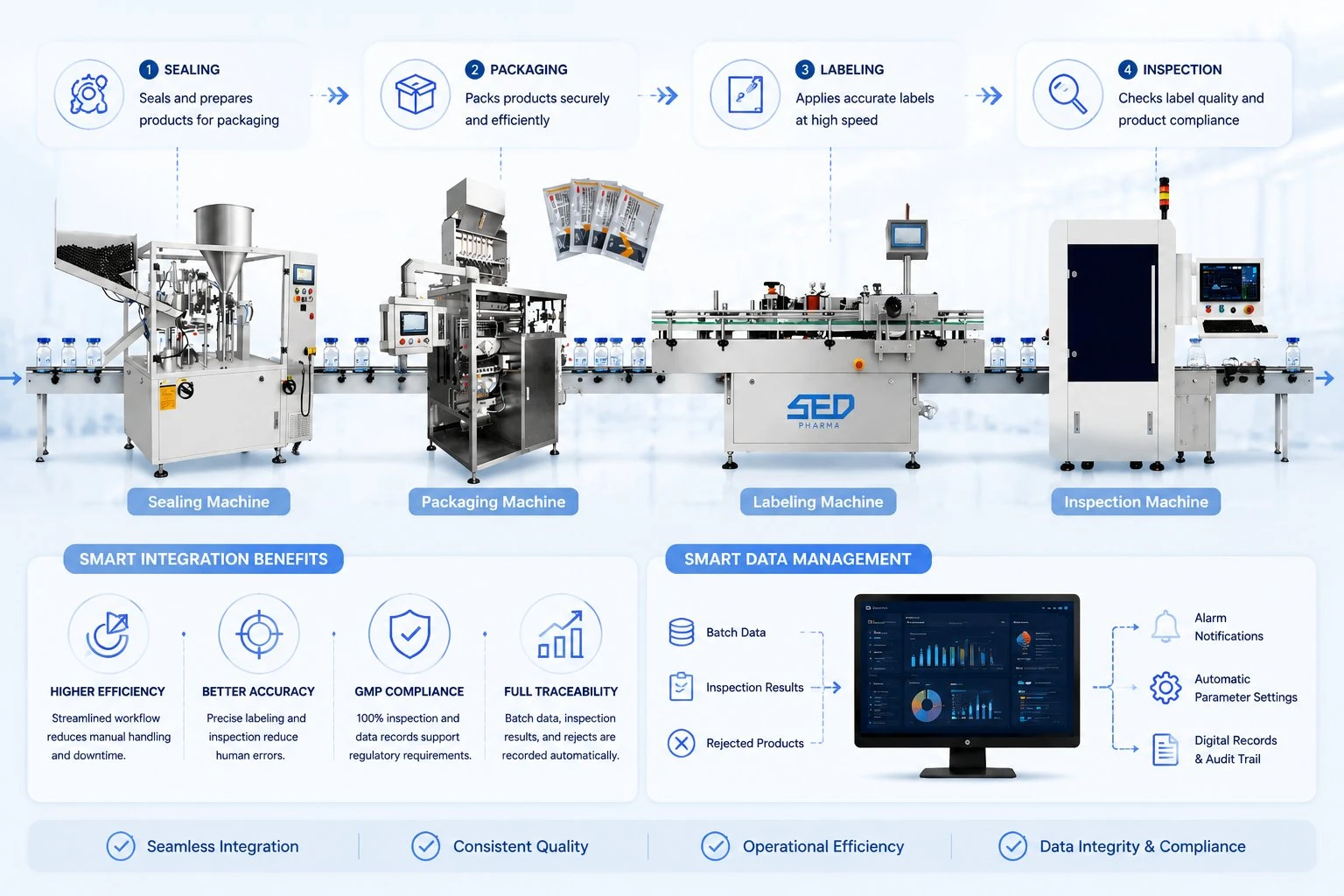
Modern pharmaceutical labeling solutions are becoming part of complete production workflows. Instead of operating as an independent machine, labeling equipment can be connected with filling, inspection, and packaging systems.This integration helps manufacturers improve production coordination and reduce manual handling.
For example, liquid pharmaceuticals like injectable vials, eye drops, and oral liquids typically rely on integrated production systems-featuring injectable equipment alongside filling, sealing, inspection, and labeling. A connected production system helps maintain product quality throughout the packaging line.
For solid dosage products, including capsules and tablets, labeling equipment can also work together with other packaging systems to create a more efficient workflow.
Smart labeling systems can collect important production information, including batch data, inspection results, and rejected products. This improves traceability and supports data integrity requirements.
Features such as automatic parameter settings, alarm notifications, and digital records also help reduce operator errors. Manufacturers can maintain stable labeling performance across different production batches.
Integrated Pharmaceutical Labeling Solutions for Different Applications
Pharmaceutical manufacturers often need more than a single labeling machine. A complete production process may include filling, capping, inspection, labeling, and secondary packaging.
SED Pharma provides integrated solutions for different industries, including pharmaceutical, cosmetic, and food applications. Its pharmaceutical solutions cover liquid production, capsule filling, tablet manufacturing, and automated packaging processes.
By connecting labeling equipment with other production systems, manufacturers can improve workflow efficiency and build more reliable packaging lines.
SED Pharma has supplied more than 600 equipment and systems for pharmaceutical companies across more than 20 countries and regions. Its solutions help manufacturers manage different production requirements and support future expansion.
For companies upgrading existing facilities or planning new production lines, integrated pharmaceutical labeling solutions provide better flexibility, easier management, and stronger long-term production capability.
Conclusion
Accurate labeling plays a critical role in pharmaceutical quality, compliance, and production efficiency. With precise application, automated inspection, and reliable data management, pharmaceutical labeling machines help manufacturers reduce errors and maintain consistent packaging performance.
SED Pharma provides integrated pharmaceutical labeling solutions that support GMP-compliant production and scalable manufacturing needs.
Contact our engineering team to discuss your labeling requirements.
FAQs About Pharmaceutical Labeling Machines
How can we improve labeling accuracy?
Improving labeling accuracy requires accurate machine settings, stable product positioning, regular maintenance, and automated inspection. A pharmaceutical labeling machine with detection systems can help reduce placement errors and maintain consistent labeling results.
How to ensure the accuracy of data?
Data accuracy can be improved through automated verification and digital management systems. Connecting labeling equipment with serialization and production databases helps ensure that printed information matches approved batch records.
Why is automated label inspection important in pharmaceutical manufacturing?
Automated label inspection verifies every product in real time, detecting missing labels, incorrect positioning, barcode issues, and printing errors. It helps reduce recall risks, improve production efficiency, and support GMP-compliant quality control.