


A pharmaceutical packaging vision inspection defect library gives inspectors, engineers and quality teams a common reference for deciding what an automated visual inspection system should detect and how each finding should be classified. Without one, a "defect" may mean a different thing to the operator who labels images, the engineer who adjusts a camera threshold and the QA reviewer who approves the result. That inconsistency weakens training, validation and trend analysis.
The practical answer is to build the library around the product and inspection task. Define the defect, severity, visual characteristics, source, disposition and acceptance rule; attach a controlled reference image or sample; then use the same record in operator training, a vision inspection training set, machine challenge tests, FAT/SAT evidence and periodic review. The library should support your approved procedures and risk assessment rather than create unverified universal limits.
Define the Inspection Scope Before Collecting Defects
Start by listing the products, formats, containers, closures, labels or tablet surfaces that the system will inspect. A defect that is critical on a sterile vial may be irrelevant to a carton, while a missing tablet, broken capsule, poor seal or unreadable code may be the key risk on a solid-dose packaging line. The library should be organized by product family and format, not by camera name alone.
Document the inspection purpose: presence or absence, cosmetic appearance, seal or closure integrity, print and code quality, count, orientation, dimensional feature or foreign-material detection. For each purpose, define what the camera can observe, what remains outside the system's scope and what requires manual or laboratory confirmation. This prevents the library from promising detection of a feature that the selected optics, lighting or mechanics cannot reliably see.
SED Pharma's tablet vision inspection equipment page can be used as a starting point for discussing tablet defects, camera stations and reject interfaces. For other formats, align the library with the actual product-contact path, lighting arrangement, speed and inspection window.
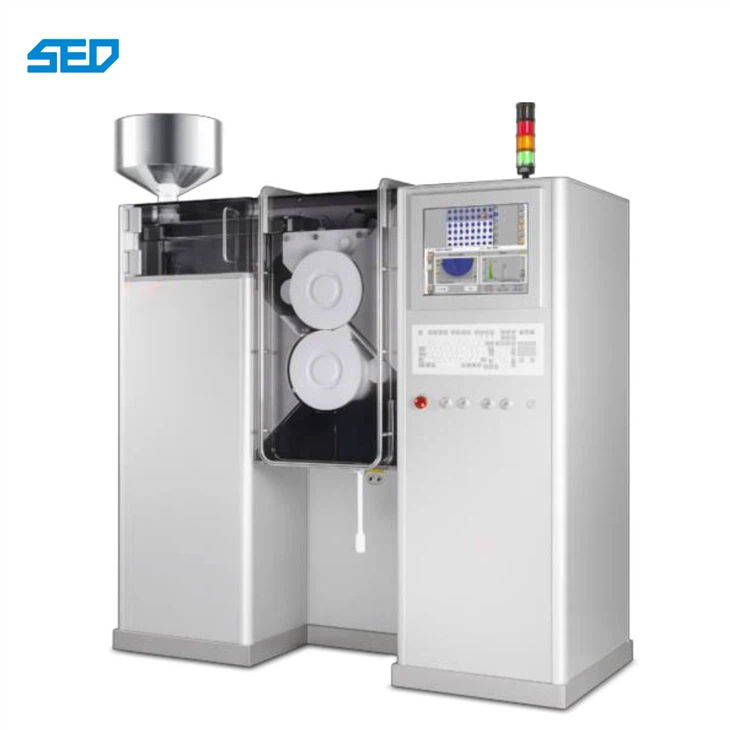
Real tablet vision inspection equipment provides the camera, lighting and reject context for a product-specific defect library.
Create One Controlled Record for Every Defect
Each library entry should answer four questions: What is the defect? How serious is it? How will the system or inspector recognize it? What action follows? Use a unique code that stays stable even if the image is replaced. Link the record to the product, component, process step and source investigation when known.
| Library field | What to capture | Why it matters |
|---|---|---|
| Defect identity | Code, name, product, format, version and owner | Prevents ambiguous labels and supports traceability |
| Definition | Observable characteristics and boundary with an acceptable unit | Helps different reviewers classify the same condition consistently |
| Severity | Critical, major, minor or site-defined category with rationale | Connects detection to investigation and disposition |
| Reference | Standardized image, physical sample ID, scale, lighting and condition | Anchors training, challenge tests and review decisions |
| Source and action | Likely process source, reject action, investigation link and review date | Turns an image catalogue into a useful quality-control tool |
Use controlled wording. "Bad appearance" is not a usable definition; "coating chip exposing the core at the tablet edge" gives the reviewer an observable feature. If a size or contrast threshold is needed, establish it through product evidence, measurement capability and the approved validation method. Do not copy a value from another product and treat it as a universal detection limit.
Classify Defects with a Risk-Based Method
Severity categories should reflect patient, product, compliance and usability risk. The classification is a quality decision that should be approved by the site quality unit, not decided only by a camera supplier. A defect may also need a separate action category for "investigate" when the visual finding is not enough to determine disposition.
| Observed symptom | Possible cause to evaluate | Confirmation approach | Controlled action |
|---|---|---|---|
| A new dark spot appears in product images | Foreign material, lighting reflection, coating variation or camera contamination | Inspect the unit under defined lighting, clean the optics, compare reference images and trace the process source | Create or update the defect record only after the condition is characterized and severity is approved |
| A known defect is inconsistently detected | Insufficient image variation, unstable presentation, threshold drift or an incomplete challenge set | Run the same coded samples across positions, speeds and approved settings | Investigate mechanics and recipe controls before changing the acceptance rule |
| Reject rate rises after a format change | New geometry, reflection, print contrast, recipe or camera alignment | Compare format-specific references, golden samples and image distributions | Add a controlled format record and complete regression testing before release |
For sterile products, FDA visual inspection guidance describes defect reference manuals or libraries and test sets as part of the training process. ISPE guidance and practice articles also emphasize defect categorization, reference photographs, data review and controlled maintenance. Apply the current approved guidance and your own risk assessment; a library alone does not establish compliance.
Build Representative Images and Physical Challenge Samples
A library is only useful when its references resemble real production conditions. Photograph or record defects with controlled illumination, magnification, orientation, background and scale. Keep the original image, the approved display version and the equipment or camera configuration used to capture it. Avoid editing that removes the visual feature being tested.
Where practical, retain physical defect standards or coded challenge units. Give each unit a unique ID, storage condition, location, owner, condition check and replacement date. Physical samples may degrade, be consumed during trials or become unrepresentative when the container, closure, coating or product changes. Do not use a damaged reference unit indefinitely simply because it is familiar.
Separate three sets: training samples, validation or qualification challenge samples, and routine monitoring samples. Keep the challenge set controlled and, where appropriate, blinded to the operator. Include good units as well as defective units so the system is challenged for false rejects and not only for defect detection.
Use the Library in Vision-System Training and Validation
For a new inspection system, translate the library into an approved challenge plan for automated visual inspection validation. Select defect classes and examples that represent product variation, difficult presentation, format extremes and known process failure modes. Define the test objective, sample identity, run conditions, expected response, data record and acceptance decision before testing.
During FAT, verify that the configured camera, lighting, software recipe, reject mechanism and data record can recognize the intended library items under the agreed conditions. During SAT, repeat the critical checks after installation and line integration. IQ/OQ/PQ or another qualification strategy may reuse appropriate evidence, but the customer's validation plan determines what can be leveraged and what must be repeated.

A packaging vision station should be challenged with defect references that match the actual format, lighting and reject path.
Review false rejects and false accepts separately. A high reject count may indicate a real process shift, an unstable presentation or an over-sensitive rule. A low reject count may indicate a clean process, poor challenge coverage or a system that is not seeing the defect. Confirm the cause with raw images, coded samples, machine settings and production records before changing thresholds.
SED Pharma's tablet and capsule inspection challenges article provides a useful reminder to define inspection points, reject handling and data requirements before finalizing the line. For related equipment planning, review the guides to pharmaceutical blister packaging and capsule filling machine selection. A defect library should be the reference layer that connects these requirements to test evidence.
Maintain the Library Through Change Control and Trending
Set a review trigger instead of waiting for an annual meeting. Review the library when a new product or format is introduced, a new defect appears, a camera or lighting system changes, a process deviation reveals a missed condition, a reference sample deteriorates or trend data shows a shift. Each revision should record what changed, why, who approved it and which training or regression tests are required.
Trend defect codes by product, batch, line, camera station and time period. The trend should support investigation, not automatically prove root cause. For example, a rise in chipped-tablet images may relate to compression, transfer, handling or lighting. Confirm the process source with appropriate samples and records before revising the library or machine recipe.
A practical maintenance review asks:
- Are all known defect classes represented for the current product and format?
- Are definitions and severity decisions still approved and understandable?
- Are images, physical standards and challenge units traceable and usable?
- Have new false rejects, false accepts or process deviations been assessed?
- Have affected operators, engineers and QA reviewers been retrained?
A Defect Library Is a Living Inspection Control
The strongest pharmaceutical vision inspection defect library connects a real product condition to a controlled definition, severity decision, reference sample, machine challenge, acceptance rule and review record. It helps the quality team standardize decisions, helps engineers diagnose image and reject behavior, and gives validation teams traceable evidence for qualification activities.
Do not treat the library as a one-time collection of photographs. Keep it under document control, review it against production and deviation data, replace unrepresentative standards, and re-test affected vision recipes after approved changes. The final classification and acceptance rules remain the responsibility of the user's quality system.
Controlled defect references connect vision-system settings, challenge samples and quality decisions.
Request a Vision Inspection Defect-Library Template
Share your product format, current defect photos or samples, inspection objectives, camera arrangement, reject logic and validation stage. SED Pharma can provide a starting template and help map defect classes to inspection points, challenge tests and equipment interfaces for technical review.
Request the Template Visit SED Pharma