


The emulsifier plays the role of emulsification of solid-liquid inclusion, liquid-liquid inclusion, oil-water emulsification, dispersion and homogenization, shearing and grinding in the stirring system of industrial equipment, and occupies an important position in industrial production. To complete the emulsification in production, there are at least two requirements: one is the effect of intense mechanical cutting and dispersing. The fluid medium of the water phase and the oil phase is also cut and dispersed into small particles, and then infiltrated and mixed with each other to form an emulsion. The second is a suitable emulsifier, which acts as a preamble bridge between oil and water molecules. Through the effect of its electric charge and intermolecular force, oil and water are mixed with emulsion.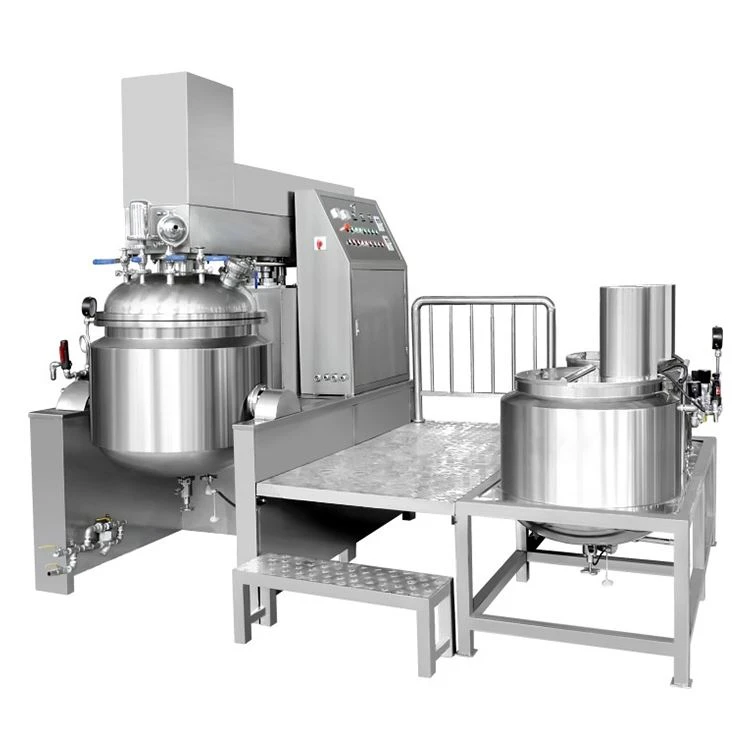
At present, the use of emulsifier is not limited to "emulsification", because of its common shearing effect, the crushing, destroying and impacting of powder particles in liquid is finally refined to an ideal particle size, and then the solid is fully mixed into the liquid. and form a relatively constant suspension. Of course, as with emulsifiers, the addition of dispersants can enhance the stability of suspensions. When a solid material can be completely dissolved by the liquid after a certain period of time in contact with the liquid, the small particles formed by shearing and impact will be dissolved by the liquid faster, because its specific surface area has increased many times.
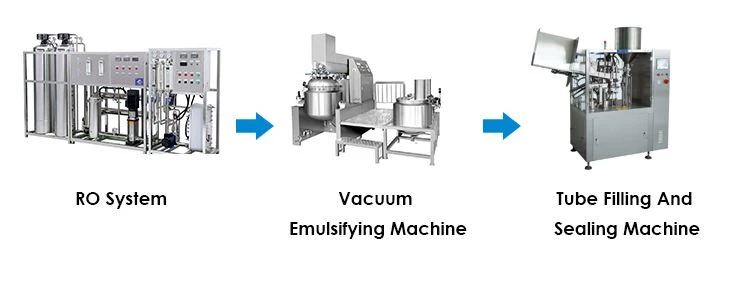
The effect of the emulsifier on the refinement and full mixing of materials is the process of "homogenization". Therefore, we can also call the emulsifier a homogenizer. In order to facilitate the distinction, it can generally be crowned with a high-speed or high-shear homogenizer, so that there are many names for the emulsifier: vacuum emulsifier, high-shear emulsifier Pump, high shear emulsifier, high shear homogeneous emulsifier, vacuum homogeneous emulsifier, pipeline type homogeneous emulsifier, etc.